Source Folding Traction Tillage Machine for Farms, Forestry, Aquaculture
Explore 30 available options for the Folding Traction Tillage Machine designed for soil preparation in agriculture, forestry, and livestock sectors. Buyers can compare specifications like working width, power source, and drive type to find suitable machinery for their needs.
Key considerations
Products List


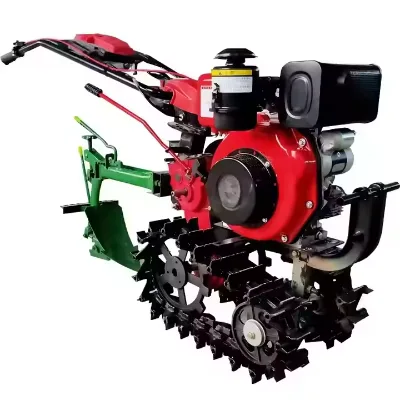
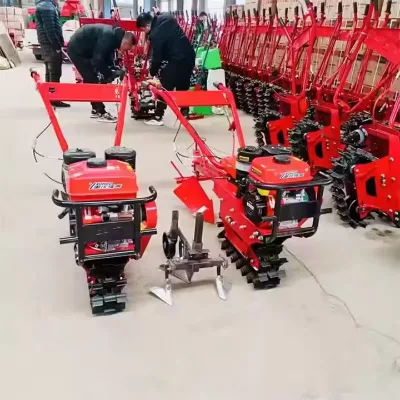


Agricultural Deep Cultivating Machinery Soil Cultivator Farm Tiller Subsoiler
$280.00 - $300.00
MOQ: 1 Pieces


New type chain track gasoline tillage machine for efficient soil preparation
$410.00 - $420.00
MOQ: 1 Sets


Farm Machinery Tractor Rotary Tiller
$470.00 - $1285.00
MOQ: 1 Pieces
Shandong Liying Agricultural Technology Development Co., Ltd.

Agricultural Machinery 3 Point Rotary Tiller
$470.00 - $1285.00
MOQ: 1 Pieces
Shandong Liying Agricultural Technology Development Co., Ltd.


Comprehensive Sourcing Guide
Strategic Sourcing Guide for Folding Traction Tillage Machines
The global agricultural sector increasingly relies on mechanized soil preparation to maintain productivity and efficiency. For buyers seeking a Folding Traction Tillage Machine, the procurement process requires a nuanced understanding of technical specifications, compliance frameworks, and supply chain logistics. This guide synthesizes available market data to provide a structured approach for evaluating potential suppliers and selecting equipment that aligns with specific operational needs. The focus remains on evidence-based criteria derived from current product listings and established industry standards, ensuring that procurement decisions are grounded in verifiable facts rather than speculative claims.
Technical Architecture and Operational Specifications
When evaluating a Folding Traction Tillage Machine, the primary technical differentiator lies in the drive mechanism and the configuration of the working elements. The observed market data indicates a prevalence of chain drive systems, which are critical for transferring power from the tractor to the tillage units. This drive type must be robust enough to handle the torque required for breaking compacted soil without excessive slippage or mechanical failure. Furthermore, the arbor configuration is a vital specification; listings show both vertical shaft and horizontal axis options. The choice between these configurations depends heavily on the specific soil conditions and the desired depth of tillage. A vertical shaft setup often offers different maneuverability characteristics compared to a horizontal axis design, which may be preferred for specific crop residue management scenarios.
The power source is another fundamental technical attribute. While the majority of traction tillage machines in the current dataset are designed to be powered by tractors, electric power sources are also noted in specific product models. Buyers must verify the compatibility of the machine's power requirements with their existing fleet. For tractor-drawn units, the matched power range is a critical metric. Data suggests a typical requirement of 100-120 HP for larger units, such as those with a maximum working width of 4.3 meters. This power requirement ensures that the machine can operate at optimal productivity levels, which can reach up to 2.88 hectares per hour for specific disc plough configurations.
The physical dimensions and working parameters define the machine's capacity. The maximum working width is a key determinant of field efficiency, with observed models reaching widths of 4.3 meters. Working depth is equally important, with standard ranges observed between 8 and 14 centimeters. The number of discs or tines, such as a count of 50 in certain models, directly influences the soil turnover rate. Additionally, the disc spacing, observed at 170 millimeters in specific listings, affects the uniformity of the tillage and the ability to handle crop residue. The clearance, typically greater than or equal to 160 millimeters, ensures the machine can traverse uneven terrain without damaging the undercarriage.
Compliance, Certification, and Regulatory Standards
Navigating the regulatory landscape is essential for international procurement. The supplied product data highlights several certifications that buyers should prioritize during the vetting process. The CE mark is frequently cited, indicating conformity with health, safety, and environmental protection standards for products sold within the European Economic Area. Similarly, the ECE (Economic Commission for Europe) certification is relevant for machinery intended for use in European markets, ensuring that the vehicle meets specific roadworthiness and safety regulations.
Beyond the CE mark, the ISO 9001:2000 standard is a recurring certification in the dataset. This standard verifies that the manufacturer has implemented a quality management system that meets international requirements for consistency and reliability. While the specific year of the standard (2000) is noted in the data, buyers should be aware that ISO standards are periodically updated. It is prudent to verify whether the supplier holds the most current version of the ISO 9001 certification, as this reflects their commitment to ongoing quality improvement. Other certifications such as SGS and RoHS are also mentioned, suggesting that the machinery adheres to specific material and safety guidelines.
The standard of construction is another area requiring verification. Some listings describe the standard as "heavy duty," which implies a design capable of withstanding rigorous agricultural use. However, this is a qualitative description. Buyers should request detailed engineering drawings or material specifications to confirm the durability of the frame and the quality of the welding. The presence of a Machinery Test Report is a significant positive indicator, as it provides third-party validation of the machine's performance metrics. When evaluating a supplier, the availability of such reports should be a prerequisite for finalizing a purchase order.
Cost Drivers and Pricing Dynamics
The pricing of folding traction tillage machines is influenced by a complex interplay of factors, including the complexity of the design, the materials used, and the level of customization offered. The observed price range in the market spans from 55 to 10,000 USD. This wide variance suggests that the market includes everything from small, basic units to large, highly specialized machinery with advanced features. The lower end of the spectrum likely corresponds to simpler models with fewer discs or smaller working widths, while the higher end reflects machines with larger power requirements, advanced folding mechanisms, and comprehensive certification packages.
Minimum Order Quantity (MOQ) is another significant cost driver. The data indicates an MOQ range of 1 to 500 units. For buyers looking to purchase a single unit for a specific farm operation, suppliers with an MOQ of 1 are essential. Conversely, large-scale agricultural contractors or distributors may benefit from suppliers willing to accommodate higher volumes, potentially negotiating better unit economics. The flexibility of the MOQ is often tied to the supplier's production capacity and their willingness to handle custom orders.
Customization is a notable feature in this sector, with "Available" listed as a standard attribute. This capability allows buyers to tailor the machine to specific soil types, crop requirements, or tractor compatibility. However, customization often incurs additional costs and may extend the lead time. Buyers must balance the desire for a bespoke solution against the budget and timeline constraints. The packing requirements, which range from iron frame boxes to wooden boxes, also impact the final landed cost. Heavy-duty packing, such as iron shellframe boxes, adds to the shipping weight and cost but provides superior protection during transit, reducing the risk of damage.
Typical Applications and Field Suitability
The application field for folding traction tillage machines is diverse, extending beyond traditional agriculture to include forestry, livestock management, and aquaculture. This versatility makes these machines attractive for multi-purpose farming operations. The primary application remains soil preparation, where the machine is used to till the land before planting. The "Soil Preparation Machinery" designation is a core attribute for most listed products. The ability to perform "Movable Operation" suggests that these machines are designed for flexibility, allowing them to be easily repositioned across different fields or farm sections.
In forestry applications, the machine's ability to clear land and prepare soil for reforestation or timber harvesting is crucial. The robust construction required for "heavy duty" standards is particularly relevant in these environments, where soil conditions can be more challenging than in open fields. For livestock operations, the machine may be used to prepare pasture land or manage manure distribution. The "Continuous Running Operation" attribute indicates that some models are designed for extended periods of use without frequent stops, which is beneficial for large-scale land management tasks.
The specific model, such as the 1ZL-4.5 or 1ZL Combined Land Preparation Machine, often dictates the optimal application. Larger models with a working width of 4.3 meters are best suited for expansive farms where efficiency is paramount. Smaller models may be more appropriate for smaller plots or areas with limited access. The traction type, described as "Traction," implies that the machine is designed to be pulled by a tractor, offering a balance between power and maneuverability. Buyers should assess their specific field conditions, including soil type, slope, and existing infrastructure, to determine the most suitable application profile for the machine.
Supplier Evaluation and Origin Verification
The origin of the machinery is a critical factor in supplier evaluation. The data consistently points to China as the primary manufacturing location, with specific regions like Shan Dong and Shandong Yucheng highlighted. These regions are known for their manufacturing capabilities in agricultural machinery. However, the specific origin should be verified for each supplier, as it can impact shipping costs, lead times, and the availability of after-sales support. Buyers should also consider the supplier's location relative to their own logistics hubs to minimize transportation expenses.
Supplier reliability is further assessed through their adherence to standards and certifications. A supplier that provides a Machinery Test Report and holds ISO 9001:2000 certification demonstrates a commitment to quality. The availability of a "Machinery Test Report" is a strong indicator of transparency and technical competence. Buyers should request these reports to verify the machine's performance against claimed specifications. Additionally, the "Quality: High Quality" attribute, while subjective, should be corroborated by customer reviews, references, and the supplier's track record in the industry.
The production capacity and flexibility of the supplier are also important. The ability to meet varying MOQs and offer customization suggests a supplier that can adapt to different buyer needs. However, buyers must ensure that the supplier has the capacity to deliver on time, especially for large orders. The "Lead Time" is not explicitly provided in the data, so buyers must directly inquire about production schedules and delivery estimates. The "Product Name" and "Model" variations, such as "Speed Tiller" or "1ZL Combined Land Preparation Machine," indicate a diverse product portfolio, which can be a sign of a supplier with broad expertise.
Quality Control and Long-Term Procurement Considerations
Quality control is paramount in the procurement of agricultural machinery. The presence of certifications like CE, RoHS, and SGS provides a baseline for quality assurance, but ongoing quality control measures are equally important. Buyers should inquire about the supplier's internal quality control processes, including material inspection, assembly checks, and final testing. The "Heavy Duty" standard mentioned in the data suggests a focus on durability, but this must be validated through rigorous testing and real-world performance data.
Long-term procurement considerations include the availability of spare parts and after-sales support. The "Farming Policy: Dry Cultivating Machinery" attribute indicates a specific operational focus, but buyers should also consider the maintenance requirements of the machine. The "Drive Type: Chain Drive" requires regular lubrication and tension checks, which can impact operational costs over time. Buyers should ensure that the supplier provides a comprehensive maintenance manual and has a network of service centers or authorized technicians.
The "Product Packing" is another long-term consideration. Iron frame boxes and wooden boxes offer different levels of protection. For international shipping, robust packing is essential to prevent damage during transit. Buyers should also consider the environmental impact of the packaging materials and whether the supplier offers sustainable options. Finally, the "Color: Yellow" or "Blue" options may have implications for visibility and safety in the field, which should be factored into the decision-making process. By addressing these quality control and long-term factors, buyers can ensure a successful and sustainable procurement experience.
FAQs
What certifications are available for folding traction tillage machines?
Available certifications include CE, ECE, SGS, and ISO 9001:2000. Some models also meet RoHS and GMP standards. Buyers should verify specific documentation for each unit to ensure compliance with regional safety regulations.
How is the power source configured for these machines?
Most units are powered by tractors, while some specific models utilize electric power sources. The matched power for larger units typically ranges from 100 to 120 HP. Compatibility with existing tractor fleets must be confirmed before purchase.
Which working dimensions are standard for disc plough models?
Standard models feature a maximum working width of 4.3 meters and a working depth between 8 and 14 centimeters. Disc spacing is often 170 millimeters with a clearance of at least 160 millimeters. These dimensions optimize soil turnover efficiency.
Can buyers request custom packaging for these machines?
Yes, customization is available for packaging requirements. Options include iron frame boxes, iron shellframe boxes, and wooden boxes. The specific packing choice impacts shipping weight and protection levels during transit.
What is the typical minimum order quantity for these machines?
The minimum order quantity ranges from 1 to 500 units depending on the supplier. Single-unit purchases are possible for small farms, while larger volumes may require higher commitments. Buyers should confirm specific MOQs with vendors.
Where are these folding traction tillage machines manufactured?
Products originate from China, specifically regions like Shan Dong and Shandong Yucheng. Buyers should verify the exact origin for each supplier to assess logistics costs. Regional manufacturing hubs often influence lead times and shipping availability.
How is the drive type configured for these tillage units?
The drive type is predominantly chain drive, transferring power from the tractor to the tillage units. Arbor configurations vary between vertical shaft and horizontal axis designs. The choice depends on specific soil conditions and operational needs.